A smaller class can give a teacher more time to notice when a student is struggling, but it may also require the teacher to teach an additional class.
That tension is at the centre of Singapore’s new school redesign pilot. From 2027, six schools will test more flexible class sizes and changes to teachers’ work beyond the classroom. Instead of taking on all three responsibilities — teaching, co-curricular activities and committee work — teachers may focus on two. The Ministry of Education will assess whether the changes improve learning and make teaching more sustainable.[1]
For Singapore school leaders, this is a timetable puzzle with consequences well beyond the timetable. The task is to organise people, roles and resources so teachers have more capacity for the work that matters to students.
Smaller classes where they make a difference
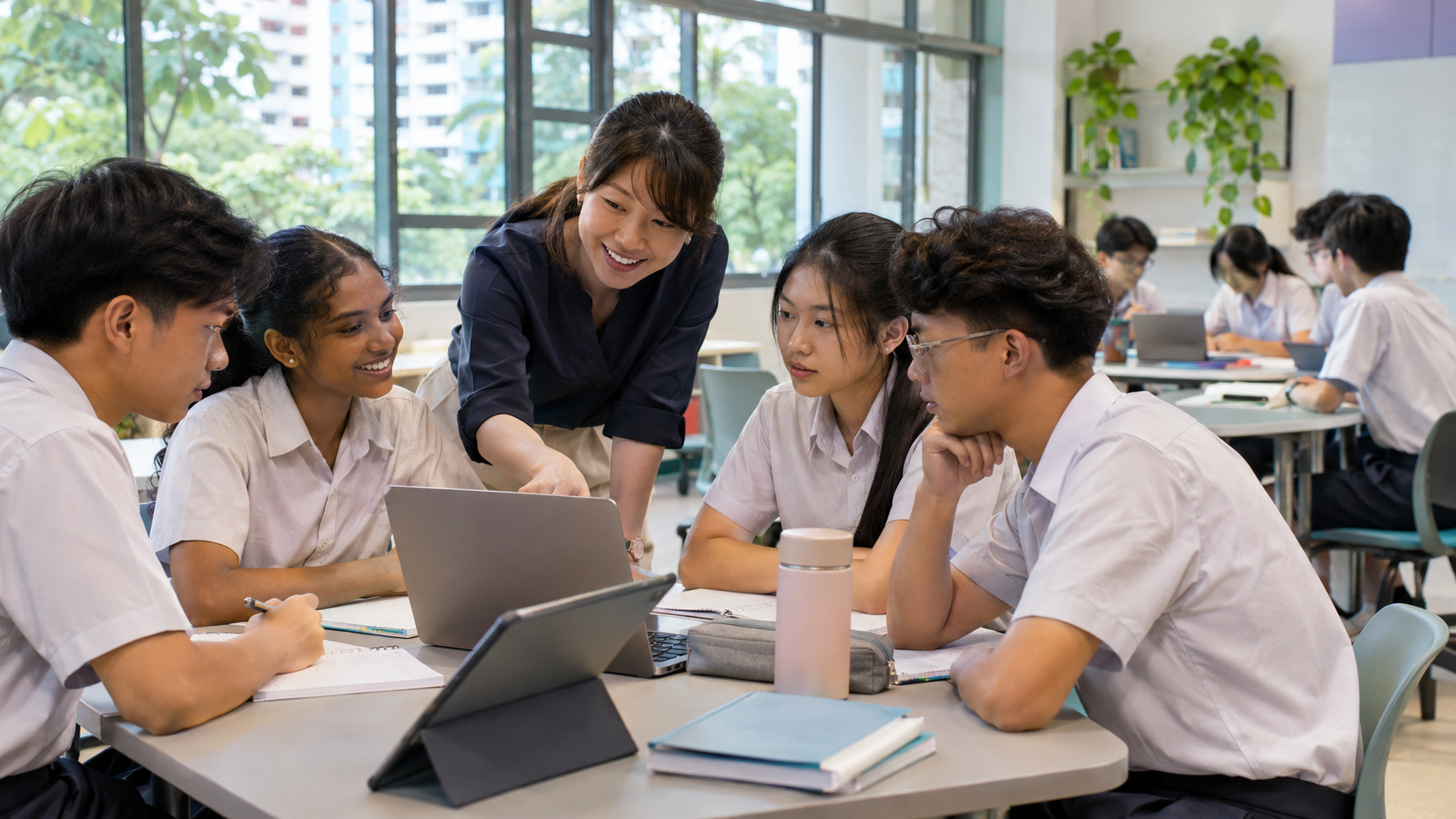
The pilot is not a plan to reduce every class by the same amount. It will explore where smaller classes could make the greatest difference to teaching and learning. That calls for close attention to students’ needs, the subject being taught and the way a lesson is designed.
School leaders will have to make those decisions alongside practical ones. Which classes would benefit from more individual attention? Can the timetable, staffing and available rooms support a change? If a teacher takes on more class groups, what other responsibilities should shift?
Class size alone cannot guarantee a better learning experience. The benefit comes when teachers can use the added attention to respond differently: spot misunderstandings sooner, adapt activities or give students more useful feedback. The pilot’s value will depend on whether school leaders can connect class-size decisions to those everyday teaching choices.
Redesigning work, not just job descriptions
The proposal to let teachers focus on two of three responsibilities — form teachership, co-curricular activities and committee work — raises another leadership question: who carries the work that moves?
These responsibilities all matter to school life. Reorganising them could create more room for lesson planning and student support. But if a committee task disappears from a teacher’s formal role and remains an informal expectation, the workload has shifted on paper without changing in practice.
Leaders will need to make responsibilities clear, match them with teachers’ strengths and interests, and check whether the new arrangements are working. Teachers should help shape the changes: they are well placed to identify where time is lost and where a new arrangement might create another bottleneck.
Measure what changes for teachers and students
Teacher workload in Singapore is not an abstract concern. In the OECD’s TALIS 2024 survey, full-time teachers reported working an average of 47.3 hours a week, compared with 41 hours across OECD systems. The survey also found that 75% of Singapore teachers had used AI in their work during the previous year.[2]
Technology is one part of the redesign. MOE plans to roll out its Teacher Workspace platform to all schools by 2027, with AI capabilities introduced over time. One possible use is generating first drafts of administrative reports. But a tool saves time only if it simplifies a task. School leaders will need to see whether it cuts manual work or adds another step to teachers’ day.[1]
As the six schools begin their pilots, leaders should track what changes for students alongside what changes in teachers’ working lives. Are more students getting the support they need? Is feedback becoming more timely? Are teachers gaining time for planning and teaching, or is work simply moving around?
Those answers can help determine whether the pilot should expand — and what other schools should take from it. Singapore’s test is not just whether schools can create smaller classes. It is whether school leaders can organise people, time and resources so that better conditions for teaching lead to better learning.
Sources and further reading
- CNA: Smaller classes, streamlined teacher duties among ideas MOE will pilot in six schools — details of the pilot, its aims and the Teacher Workspace rollout.
- OECD: Results from TALIS 2024 — Singapore country note — data on teacher working hours and reported AI use.
- Singapore Ministry of Education: Committee of Supply 2026 announcements — further context on education priorities, including AI literacy and student support.